When Taron Egerton’s nice guy becomes irresistible to every woman he meets overnight, Jonathan Schey’s takedown of performative allyship doesn’t quite escape being a performance of its own.
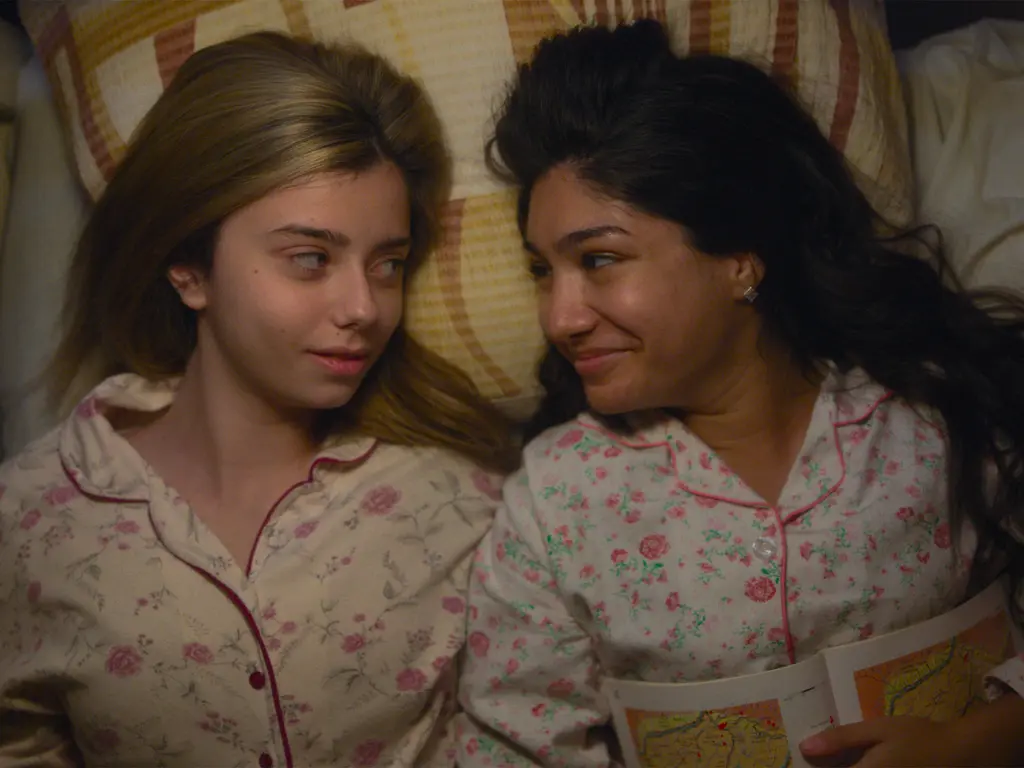
You can tell a lot about a rom-com from the posters the characters have on their wall. The morning after Adam (Taron Egerton) and Liv (Mia McKenna-Bruce) meet cute at a bar – he rescues her from a diabolical chat-up line, apologies on behalf of his gender, and gushes over Before Sunrise – she wakes up in his bed and sees a Cleo from 5 to 7 lobby card. Right – he’s cultured, sensitive, enjoys the work of women artists. Or maybe, more literally, he keeps girls on a tight schedule: No sooner has he brought her a latte in bed than he gets the ick, goes cold, doesn’t actively ask Liv to leave (remember, he’s a nice guy), but she gets the message clear enough, and soon departs the blast area of what, we come to understand, is another of Adam’s lovebombings.
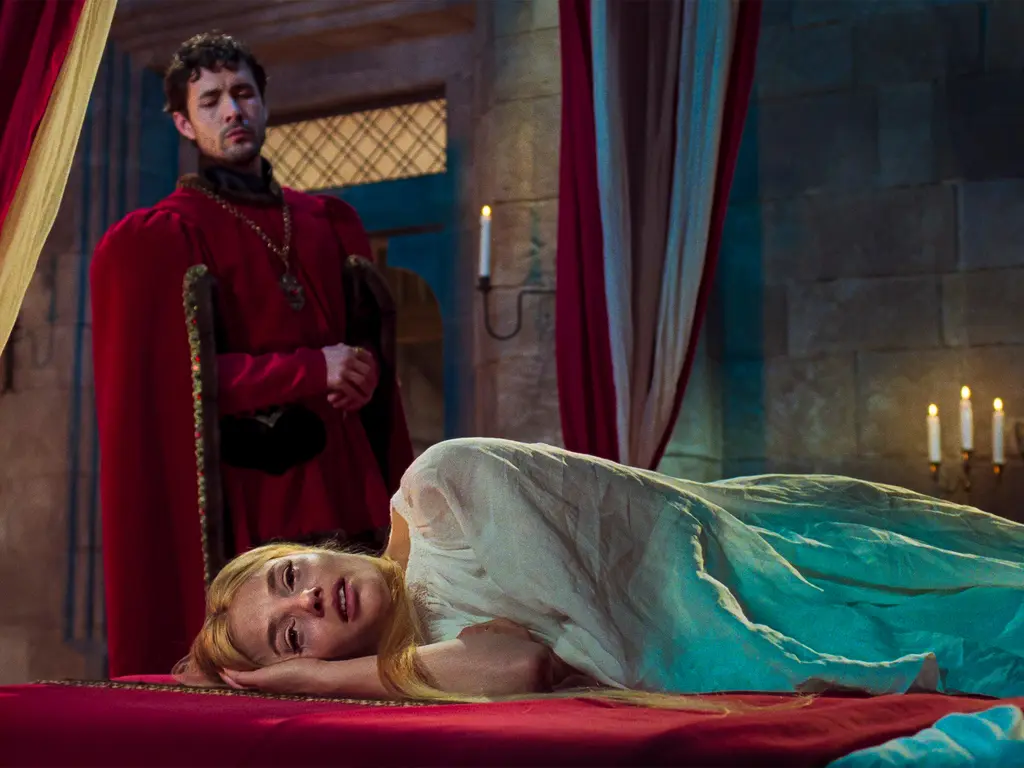
Later, after a Bridge Theater performance of Oedipus Rex, Adam goes home with Sofia (Jessica Henwick), and fails to notice her poster advertising a performance of Euripides’ The Bacchae, a play in which King Pentheus of Thebes sneaks into a Dionysian orgy, only to be torn from limb to limb by the reveling women in their orgasmic ecstasy. If Adam had asked, he might have realised he’s a character in a Greek tragedy, not a rom-com: Sofia drugs him, and when he wakes up, he finds himself a modern Pentheus, desired by all women, ravenously and perhaps terminally.
Get more Little White Lies
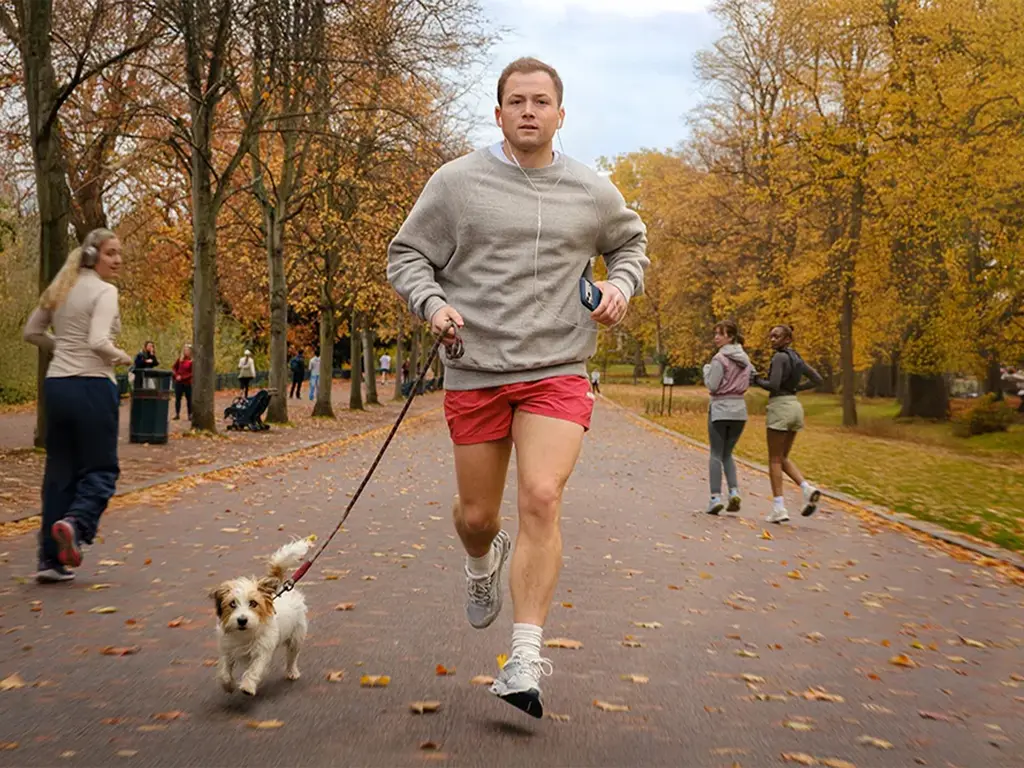
Writer-director Jonathan Schey has said that the genesis of Everybody Wants to F*ck Me came when a female friend analysed his Hinge profile as part of her set, earning cheers from the women in the audience as she “destroy[ed]” his repeated, unconscious use of therapeutic language (“I’m not in a great headspace”) to come off as kind and likeable even when walking back earlier declarations of big feelings. One imagines the West Elm Caleb affair in miniature: The public shaming of a softer form of manipulation, the kind practiced by guys like Adam, who works in a woman-owned art gallery and jogs with his dog, a heterochromatic mutt named after Alana Haim. The movie wrings insular laughs from a very specific type of guy, a bourgeois millennial creative-class urbanite who carries around Ottessa Moshfegh books in a Mubi tote, a fuck boy who presents as, and may even consider himself, a romantic – and whose self-aware rationalisations can become part of his spiel, as happens when Sofia commandeers Adam’s phone and subjects his apps to the same scrutiny as Schey’s friend did.
The circumstances behind Adam’s sudden pheromonal irresistibility are eventually explained through a genre-straining combination of mythology and biochemistry, complete with horrifically chintzy third-act animal attack, though, as with the political dystopia of One Night Only, the rules governing it are clarified about exactly as thoroughly as the movie requires: A late-breaking loophole explains why Adam’s lesbian best friend (Charly Clive) isn’t attracted to him, and the script never leaves him alone with a woman under the age of 20. At first it feels like a blessing, not a curse; everyday interactions with bookstore clerks and yoga classmates turn on a glance, in imitation of the wishbone-snapping logic of pornography. But the female gaze soon turns metaphorically, then literally, assaultive. As in Obsession, a man’s monkey-paw desires turn back on him disproportionately, doubling and trebling the weight of his libido until the whole of London becomes a city of Nikkis, hypersexual and zombielike.
Now the object, rather than subject of desire, Adam’s nice-guy façade fades away, revealing an underlying aggression as Adam decompensates through a series of manospherical rantings and a scene where this typical male ally disrupts the opening of a feminist art exhibition by wielding an oversized phallic sculpture. The film’s title is at once a man’s boast and his delusion, as well as a female’s lament; Adam’s masculinity is caricatured and engorged even as he’s feminised and subjected to a role-reversal.
In its exposure and petard-hoisting of guys who have internalised the necessity of being nonthreatening but still check out girls on the Tube and shoot their shots on the apps, Everybody Wants to F*ck Me will be cathartic viewing, at least for viewers who think that the biggest problem with modern-day male-female relations is men who read novels in public. But, coming from a straight male filmmaker, an enlightened takedown of performative nice guys just feels like another nice-guy performance – having accepted the premise of this contemporary dating discourse, the film must now be taken on those terms as well, and its loud insistent allyship can only feel like another tiresome layer of artifice atop a modern-day dating world that’s already more complicated than anyone wants it to be. Just be normal!